
Meeting summary for Parents session: Soft Skills for Managing Conflict with Teens (30/11/2024)
November 30, 2024 2024-11-30 15:56Meeting summary for Parents session: Soft Skills for Managing Conflict with Teens (30/11/2024)
Meeting summary for Parents session: Soft Skills for Managing Conflict with Teens (30/11/2024)
 David
David 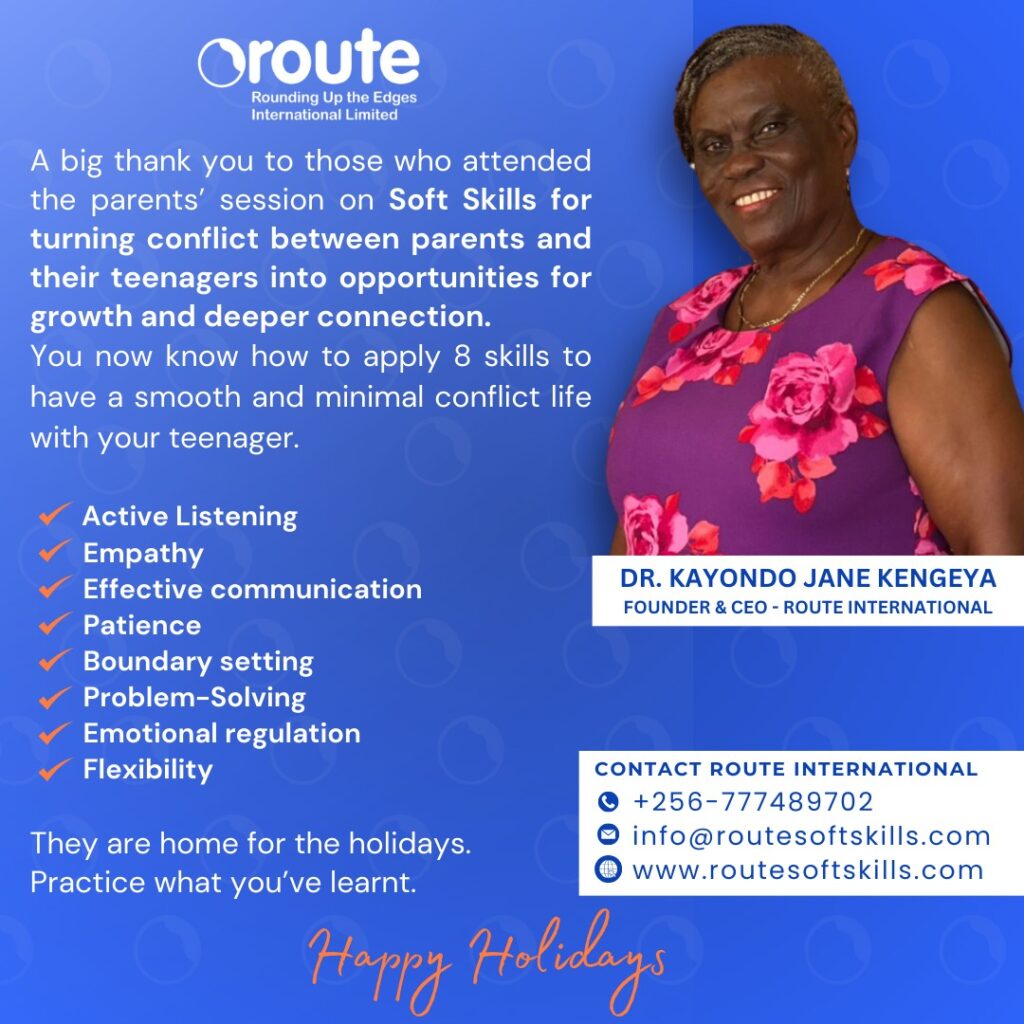
Quick recap
The meeting focused on addressing conflicts between parents and teenagers, emphasizing the importance of active listening, empathy, setting boundaries, and problem-solving skills. Participants shared personal experiences and challenges in parenting, discussing topics such as technology use, academic pressure, and communication issues. The session concluded with encouragement for parents to practice the skills learned, seek help when needed, and spread awareness about the importance of these parenting techniques.
Next steps
• Parents to practice active listening skills with their teenagers.
• Parents to exercise empathy when dealing with conflicts with teenagers.
• Parents and teenagers to collaboratively set clear boundaries, needs, and expectations.
• Parents to implement problem-solving techniques when addressing issues with teenagers.
• Parents to practice emotional regulation and understand their own emotions before reacting.
• Parents to seek professional help or counseling if needed for teenager-related issues.
• Attendees to be ambassadors for ROUTE International and invite more parents to future sessions.
• ROUTE International team to organize a session for teenagers on January 14th.
• ROUTE International team to create a program for continuous topics and exercises for teenagers during vacation.
• Parents to approach schools about introducing ROUTE International’s programs and counseling services.
• A participant (Josephine) to contact Dr. Jane privately to discuss school-related matters.
• ROUTE International team to add Josephine to the Friends of ROUTE communication list.
• Parents to practice viewing conflicts as opportunities for connection with teenagers.
• Parents to work on building trust with their teenagers.
• Route team to continue offering sessions even with low attendance.
Summary
Managing conflicts with teenagers
Dr Jane led a discussion on managing conflicts between parents and teenagers, emphasizing the importance of turning these conflicts into opportunities for growth and deeper relationships. The participants shared their struggles with their teenagers, such as the use of gadgets, anxiety and stress over schoolwork, and balancing time between leisure and academic activities. Dr Jane introduced the concept of eight key soft skills to help manage these conflicts and delved into each one in detail. The conversation ended with the participants sharing their concerns and expectations for the session.
Navigating Generational Communication Challenges
A participant expressed her concerns about her daughter growing up and becoming more independent, which she fears may lead to a lack of trust and consultation. Dr Jane suggested that the participant should focus on building trust and setting boundaries to maintain a healthy relationship with her daughter. They discussed the generational gap between parents and teenagers, the different communication styles, and the influence of hormones on teenagers. Dr Jane also highlighted the potential for conflict due to the pressure to conform with peers and the use of technology. They concluded by discussing the various ways parents react to conflicts, such as imposing curfews, confiscating phones, and using silent treatment, which often do not provide a solution to the problem.
Teenagers and conflict manifestations discussed
Dr Jane discussed the various manifestations of conflict in teenagers, including issues around chores, appearance, and self-expression. She highlighted how these conflicts can lead to academic decline, substance abuse, sleep disturbances, risk-taking behavior, and increased conflict with siblings. Dr Jane emphasized the importance of recognizing these signs as indicators of underlying tension and conflict and suggested that poor handling of these conflicts could have severe consequences. She also shared personal experiences of teenagers reacting to parental conflict in destructive ways, such as harming pets.
Active listening in teenager communication
Dr Jane discussed the importance of active listening and understanding the underlying feelings and emotions of teenagers. He emphasized the need to go beyond hearing the words and to observe non-verbal communication such as facial expressions and eye contact. Dr Jane also stressed the importance of not interrupting teenagers and allowing them to fully express themselves. He suggested reflecting on the message to ensure understanding and to avoid misunderstandings. He concluded by encouraging open communication and the use of non-verbal cues to enhance understanding.
Active listening in conflict resolution
In the meeting, Dr Jane emphasized the importance of active listening in conflict resolution, particularly in parent-teenager relationships. She noted that active listening is a difficult skill to practice but is crucial for resolving conflicts. Participants shared their experiences with active listening, highlighting its effectiveness in building trust and fostering open communication. They also discussed the challenges of distractions, such as phones, which can hinder active listening. A participant emphasized the importance of being trustworthy and setting a good example for children. Participants agreed on the need for intentional action to instill desired values in children, rather than relying on osmosis.
Empathy and boundaries in parenting
Dr Jane emphasized the importance of empathy in parenting teenagers, urging parents to put themselves in their teen’s shoes and understand their feelings. She also highlighted the need for setting clear boundaries and expectations with teenagers, and the importance of open communication. A participant shared his personal experience of changing his parenting approach after reading a book on better parenting, which led to a better understanding of his son’s issues. Participants agreed with Dr Jane ‘s points, with a participant adding that parents need to appreciate the different pressures and issues faced by their children today.
Effective communication and boundary setting
Dr Jane emphasized the importance of setting boundaries, understanding needs and limits, and effective communication in resolving conflicts between parents and teenagers. She suggested that setting boundaries should be done calmly, respectfully, and clearly, and that both parents should agree on them. She also highlighted the need for consistency in enforcing boundaries and the importance of compromise. A participant added that setting boundaries together helps meet teenagers on an adult ground and holds them accountable. A participant, a social worker and mother of three girls, agreed that mastering these skills as parents would enhance not only family life but also how they coexist with the rest of the world. The discussion concluded with Dr Jane introducing the next skill, problem-solving, which she believes is crucial for harmonious relationships between teenagers and their parents.
Effective parent-teenager problem solving
Dr Jane emphasized the importance of problem-solving in parent-teenager relationships, suggesting that parents should focus on finding solutions rather than blaming their children. She advised parents to understand the root cause of their children’s behavior and to be open-minded when brainstorming solutions. Dr Jane also stressed the need for parents to agree on solutions together, weigh the pros and cons of each solution, and implement them effectively. She used examples such as a child leaving a plate on the table and a teenager sleeping over at a neighbor’s house to illustrate her points.
Addressing teenage problems and empathy
Dr. Jane discussed the issue of teenagers facing problems and the tendency of parents to blame them instead of solving the problem. She highlighted the importance of understanding the root cause and avoiding blame. Dr Jane then elaborated on emotional regulation, stressing the need to identify and understand one’s own emotions before expressing them. She also emphasized the importance of seeking help when needed, as it is a sign of a strong family. She underscored the need for problem-solving and empathy in parenting.
Emphasizing help and support for parents
Dr Jane emphasized the importance of seeking help and practicing the skills shared during the session. She encouraged the parents to be ambassadors and bring more parents into the room. Dr. Jane mentioned that there will be a session for teenagers on the 14th December. Participants expressed their appreciation for the training and shared their experiences. They also discussed the challenges of seeking help and the need for more support from schools. The conversation ended with Dr Jane thanking everyone for attending and encouraging them to reach out for further assistance.